

We are back to square one, so to say, as we now begin our cycle of the reading of the Torah, Bereshit, from the very beginning, with the word Bereshit, or as it is commonly translated in English, “In the beginning”.
We have the orderly creation of the universe, then the creation of Adam, meaning the human being, both male and female, culminating in Shabbat, to indicate that from beginning to end, all of creation is good, noble and complete. In creation, we have all we need, and the Holy One can now bless His creation and sanctify the seventh day, Shabbat.
And then, it goes downhill. This wonderful being, Adam, instead of being the bridge between Heaven and Earth as the image of G‑d on earth, fails a simple order. Anger erupts between man and woman, jealousy between brothers leads to murder, and the world is embroiled in violence.
We may ask, if G‑d is all-knowing, shouldn’t He have known what He was getting into when He created Adam? After all, a garden with some vegetarian lions and gazelles roaming about peacefully would have been enough.
Even the Psalms ask the question:
Hashem, Mah Adam vatedaehu? “O Lord, what is mankind that You pay attention to him?” (Psalm 144)
Our sages raised this very question and imagined a debate on the values of this unique entity, Adam.
Said Rabbi Simon: “At the creation of Adam, the angels formed opposing parties, one side declaring ‘Create’, the other ‘Don’t create’.”
“Mercy and truth are met together; righteousness and peace have struck each other” (Psalm 85).
The Hebrew word for “struck each other” is usually translated as “kissed”, but the Midrash is based on an alternative meaning.
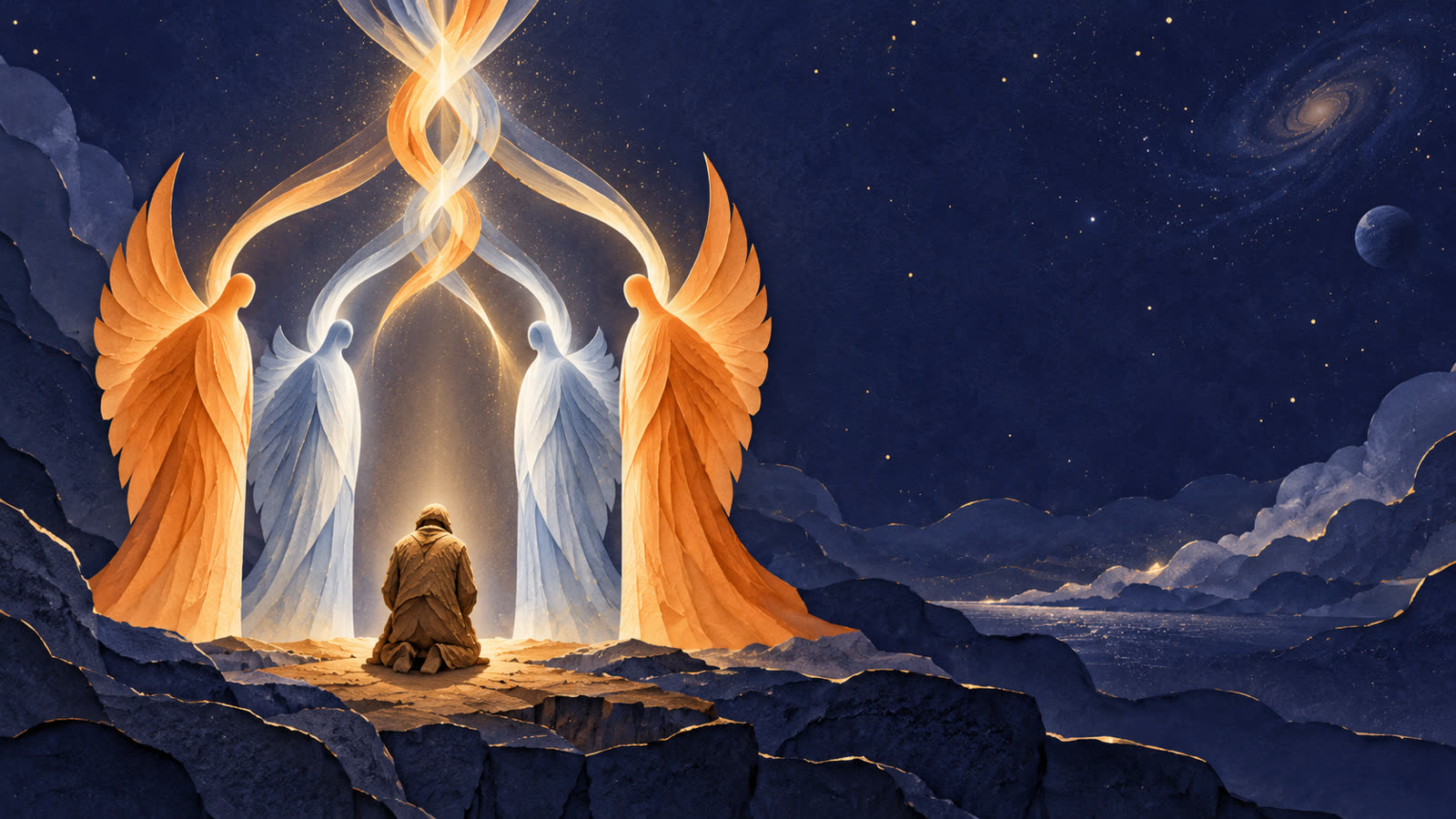
Loving kindness: for he does acts of love and kindness.
Justice: for he carries out acts of justice.
Truth: for he is full of lies.
Peace: for he is full of strife.
What did the Holy One do? “He took truth and thrust it down to the ground!” (Daniel 8)
The angels reacted: Lord of the Universe! You are shaming Truth, Your own Prime Minister of the Divine Court?!
To this G‑d replied: “Let truth spring forth from the earth, and let justice look down from heaven” (Psalm 85).

“Let truth spring forth from the earth”Psalm 85
The Holy One is very aware of the internal contradictions of human existence: loving kindness and truth conflict, as do justice and peace. Loving kindness may need denying someone else’s faults. Justice for one may be grievance for another.
The Midrash then continues in the name of R. Huna: While the angels were busy debating with each other, G‑d created Adam and then said, “Why are you still debating? Adam has already been created!”
Angels, divine robots, are perfect. Like computers, they do as they are programmed, no more, no less. They have no passions and no drives. Therefore, they can never rise above themselves.
Adam, the human being, is created with the drive to good and the drive to evil. Adam, the human being who struggles to combine the conflict of Loving kindness, Truth, Justice and Peace, is distinguished with being “in the divine image”, not the angels.
For all of the failings of humanity, the Holy One goes ahead and creates Adam in the expectation of a being that is capable of rising above himself or herself.
Our wonderful students at Mevaseret Zion Education Center are reminders of the potential that each human being is in the “Divine image”, capable of rising to the highest realms.